

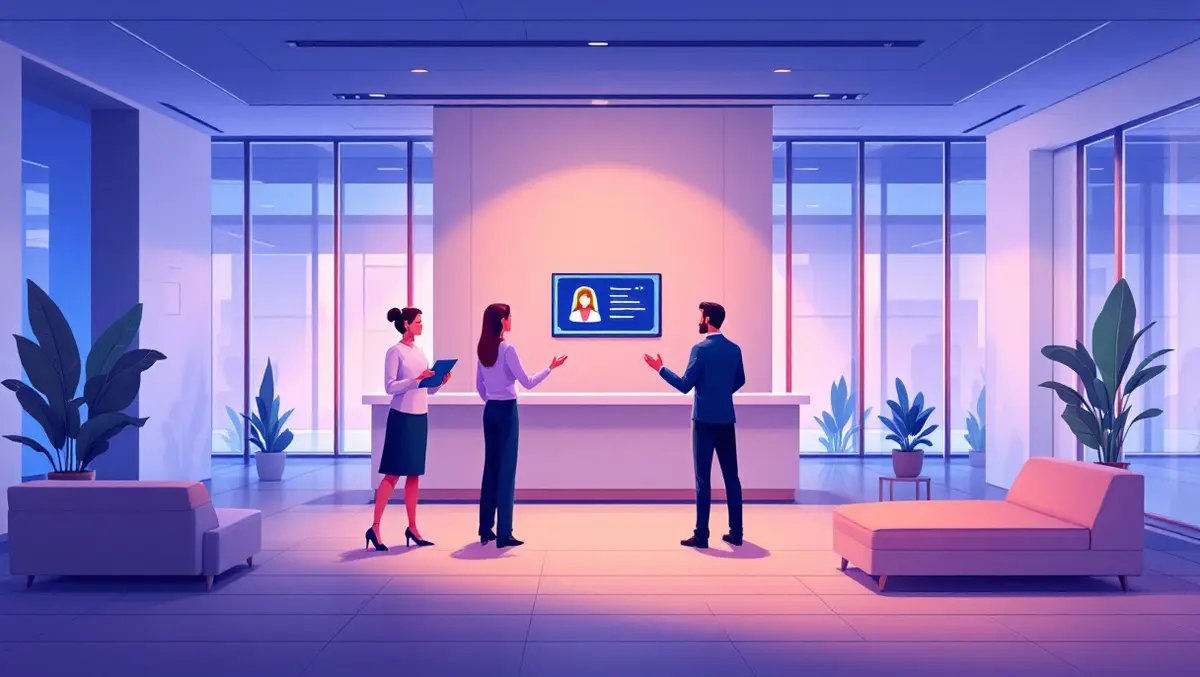
Smart Spaces unveils Max AI agent to transform office management
Thu, 4th Sep 2025
Smart Spaces has launched Space Agent, a new agentic AI workplace concierge, aimed at transforming the management and engagement experience within modern commercial office spaces.
Space Agent, known through its interactive persona 'Max', is equipped for both text and audio interaction and is embedded directly within the Smart Spaces smart building operating system (OS) and employee engagement application.
Chief Executive Officer of Smart Spaces, Dan Drogman, stated:
"Space Agent extends and elevates our platform by adding an intelligent, conversational layer that removes complexity and gives time back to users. With Max, we're delivering a simple, proactive AI-based workplace companion that's not just about managing buildings – it's about radically changing how people interact with modern commercial office space today."
The tool has been developed for a diverse range of users including landlords, asset managers, facilities teams, tenants and employees. It utilises natural language processing to provide responses to workplace enquiries, automate administrative tasks, and act on requests in real time. All operations are enabled by Smart Spaces' integrations with various building management systems.
Feature set
Key functions of Space Agent include the ability for users to reserve desks, book meeting rooms, secure parking spaces, and interact directly with building facilities. Facilities managers can query Max for building analytics, such as office occupancy numbers, HVAC performance on specific floors, water usage statistics, and recommendations for energy reduction targets over defined periods. Space Agent automatically generates dashboards, carries out data analysis, and executes recommended actions when necessary.
Additionally, Max can recommend wellbeing and community-building activities to new occupants, facilitate activity bookings, and support peer networking within the workplace. The tool enables immediate reporting of issues - such as faulty equipment - by raising and tracking support tickets through a conversational interface.
Dan Drogman highlighted the operational efficiency and broader benefits offered by Space Agent, saying:
"Buildings that can diagnose, respond and adapt in real-time are cheaper to run, faster to optimise and, perhaps most crucially, easier to lease. Occupiers want tools for their staff to help them engage with their workplace. Landlords want information and control over their facilities. ESG frameworks are demanding and require lots of information. We believe Space Agent will help deliver in all these areas."
Smart Spaces cited a projected increase in the size of the global smart building market, with a report by Grand View Research estimating growth from USD $103 billion in 2023 to USD $570 billion by 2030, representing a compound annual growth rate of more than 28 per cent. At the same time, research published by Deloitte Insights, citing Gartner, indicates that more than four billion connected IoT devices are expected to be deployed in commercial smart buildings by 2028.
Integration and deployment
Space Agent is integrated within the cloud-hosted Smart Spaces platform, which is currently deployed across prominent commercial properties worldwide. The system manages a range of building functionalities, including physical access control, lifts, HVAC, lighting, IoT devices, visitor management, and various occupancy features. With the addition of Space Agent, a conversational AI interface is now available to streamline interaction with these building systems.
Max operates via a user-friendly text or audio chat interface, and agents can be configured to take actions when prompted by specific events or enquiries. The initial rollout of Space Agent will be limited to selected Smart Spaces clients ahead of a planned broader release.