

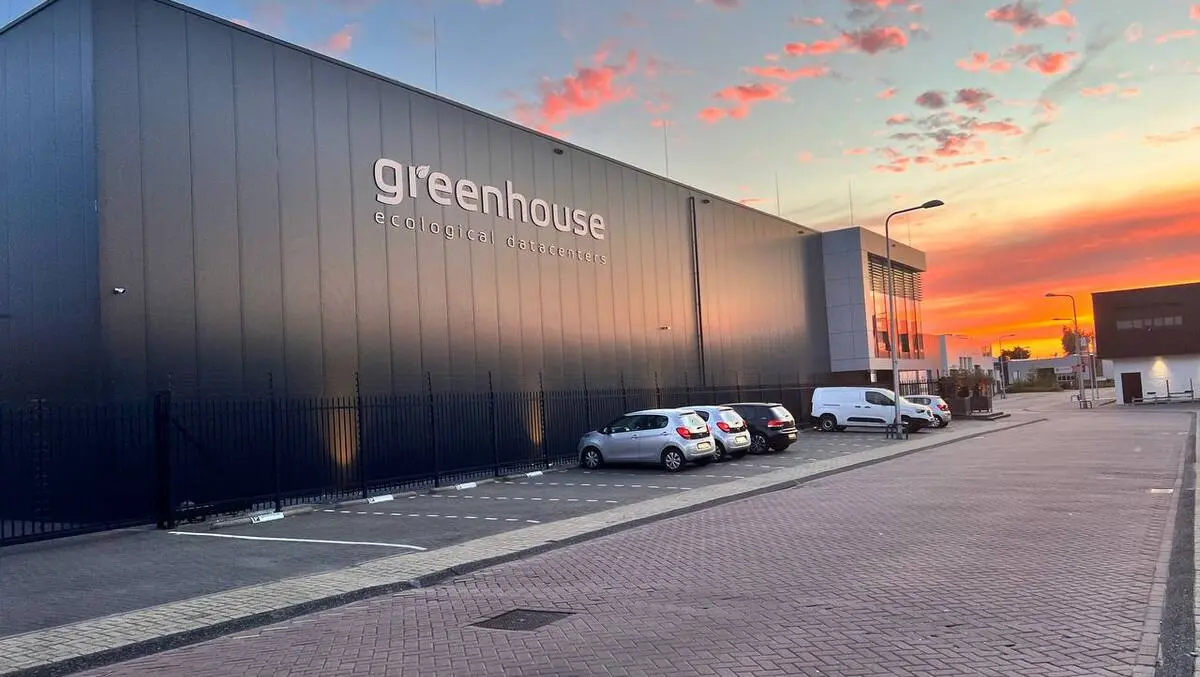
IOEMA subsea cable lands at Greenhouse, boosting Dutch digital hub
Tue, 7th Oct 2025
The IOEMA subsea cable will land at Greenhouse Datacenters in Naaldwijk, strengthening digital connectivity across the Netherlands and Northern Europe.
The IOEMA Project is laying out plans for a 1,600-kilometre subsea fibre optic cable to establish direct connectivity between the Netherlands, Germany, the United Kingdom, Denmark, and Norway. The cable system is designed to be fully armoured and secure along its entire length. Further connectivity to France is also being explored as part of the project's scope.
This new landing, the seventh in Northern Europe and the second in the Netherlands, will come ashore in Scheveningen, near Rotterdam and The Hague, before connecting to Greenhouse Datacenters in Naaldwijk. The location was selected for its proximity-just 12 kilometres from the cable's landfall-and for the presence of major connectivity partners in Greenhouse's facilities, including AMS-IX, Lumen, Delta Fibre, Odido, DCspine, alongside key IOEMA collaborators such as Eurofiber and Relined.
Direct access and security
Eckhard Bruckschen, Chief Technology Officer of IOEMA Fibre, explained the significance of this collaboration and the connections it will establish for the region:
"We are pleased to announce an additional landing partner for the second Dutch landing point for the IOEMA fibre optic cable in the Netherlands, in the Rotterdam/The Hague area. By partnering with Greenhouse Datacenters, IOEMA connects directly into a rich connectivity ecosystem, including an on-site AMS-IX PoP. This makes the IOEMA cable accessible to the broader market in South Holland and beyond. Organisations in this area can benefit from ultra-fast, redundant, secure, and AI-ready connections to other Internet hubs in Northern Europe via Greenhouse."
The IOEMA project is also evaluating the addition of sensors to the cable, with the aim of making it the first SMART cable in Northern Europe, capable of providing enhanced information and monitoring.
Implications for digital development
Greenhouse Datacenters was chosen as a landing partner due to its location and ecosystem of connectivity providers. Ruben van der Zwan, Chief Executive Officer of Greenhouse Datacenters, addressed the broader impact of the new subsea cable:
"The Axiom/Terabit report 'Study on the development of the submarine cable market', which was recently on the agenda of the Dutch House of Representatives, extensively examined the strategic national importance of new submarine cables for the Netherlands. The deployment of new submarine cables contributes significantly to stimulating the digital business climate in the Netherlands."
"Together with data centers and Internet Exchanges, submarine cables form the basis for further economic development of the Netherlands as an international digital hub. The landing of this submarine cable at Greenhouse Datacenters is therefore much more than just the addition of a strong international network connection. It strengthens the European digital and economic competitiveness of the Netherlands, our data sovereignty and digital resilience, while reducing vulnerability to network sabotage and damage."
Van der Zwan also commented on the positioning of Greenhouse as a strategic alternative to existing data centre infrastructure in Amsterdam, pointing to advantages in sustainability, scalability, and connectivity:
"At the same time, it positions Greenhouse more clearly as a strategic addition to the busy Amsterdam data center market. Greenhouse combines ultra-low latency connections to Amsterdam and an on-site AMS-IX PoP with sustainability, available power, and scalability. With the addition of direct connections to Northern European Internet hubs via the IOEMA subsea cable, Greenhouse positions itself as a strategic data center alternative to Amsterdam in South Holland."
Strategic digital role
Highlighting the significance of subsea cable landings for local economies and digital infrastructure, Rick Pijpers, a strategic advisor involved with the project, described the landing station's broader function:
"The landing station for the subsea cable at Greenhouse is much more than a technical facility. It is a strategic digital hub. A data center that functions as a landing station becomes a gateway to international data traffic, attracting ecosystems of carriers, cloud providers, and enterprises, thereby strengthening the digital economy. For Greenhouse and IOEMA, this not only strengthens their own position, but also boosts international connectivity between Norway, Denmark, the United Kingdom, the Netherlands, and Belgium. It creates a new sovereign AI corridor connecting the locations where AI factories will be established in the coming years with important locations such as The Hague, Rotterdam, and Brussels."
The robust connectivity in the Rotterdam/The Hague area should reinforce the role of the South Holland region in both current and emerging digital markets, driven in part by data centre capabilities and low-latency infrastructure.
Enhanced regional digital hub
Peter van Burgel, Chief Executive Officer of AMS-IX, commented on the potential impact on the regional and international digital network landscape:
"This makes Greenhouse a powerful digital hub and an important alternative to the Amsterdam data center market. Enhanced by AI applications, the IOEMA subsea cable will bring huge amounts of international network traffic to Greenhouse, while the existing AMS-IX PoP will enable direct exchange with international and regional carrier, cloud, ISP, and content networks. This will deliver speed, redundancy, and (cost) efficiency in digital traffic, reinforcing the South Holland region as a digital hub for AI-driven growth."
The IOEMA subsea cable system, once completed, will comprise 24 fibre pairs with a planned capacity of up to 1.0 petabit per second, connecting major digital markets in Northern Europe. Discussion is ongoing regarding future expansion to include France.
The new landing at Greenhouse Datacenters is expected to bring additional resources and security to the Netherlands' digital infrastructure, supporting both existing and emerging internet traffic driven by artificial intelligence and other advanced applications.