

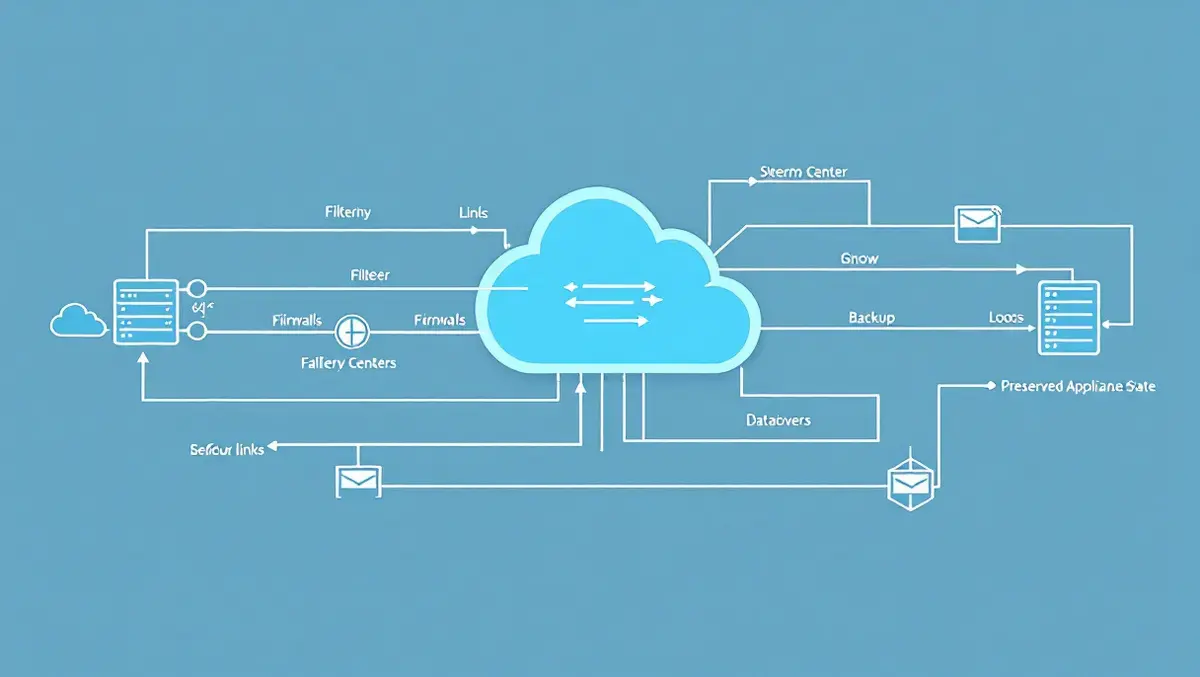

Google has outlined three main customer uses of BGP route policies for Cloud Router, following the introduction of policy named sets.
Customers are using the routing controls mainly for route filtering, traffic path selection in active and standby network designs, and managing asymmetric routing in environments that rely on stateful firewalls or other on-premises appliances.
BGP route policies for Cloud Router became generally available more than a year ago. The feature was introduced to give network administrators more direct control over how network paths are evaluated and propagated in hybrid cloud environments.
More recently, Google added policy named sets for Cloud Router. The feature lets administrators group IPv4 or IPv6 prefixes, or BGP communities, into reusable sets, allowing them to manage routing rules across multiple Cloud Routers without editing each policy item individually.
Route filtering
The first major use case Google identified is route filtering and network protection. Organisations are using policies to block unwanted learned routes from peers and to stop specific subnet prefixes from being advertised from their Virtual Private Cloud networks.
Some customers have gone further by adapting the default operating model to create a stricter setup, appending a final rule that drops all routes not explicitly allowed. In practice, that approach is intended to reduce the risk of routing loops, hijacked paths, or traffic being sent into a black hole because of an incorrect advertisement.
This highlights one practical reason cloud-native routing controls have gained attention. Network teams that previously needed third-party virtual appliances to apply this level of policy logic can now handle filtering and attribute changes directly within Cloud Router.
Traffic paths
The second use case is traffic engineering for active and standby architectures. Customers are using BGP route policies to influence which path becomes the preferred route for traffic without altering hardware in their data centres or other on-premises environments.
One method involves changing the BGP multi-exit discriminator, or MED, to make a particular peer more attractive for incoming traffic. Another relies on AS-PATH prepending, in which additional values are added to the AS-PATH so a route appears less preferable and traffic is steered away from a congested or backup link.
For businesses running hybrid networks, these controls matter because traffic placement often has cost and resilience implications. Active and standby interconnect designs are common when companies want one route to carry normal production traffic while another remains available for failover, maintenance, or periods of heavy demand.
Google presented this as a way for customers to make path decisions within its cloud networking layer rather than changing on-premises routing hardware. That can simplify operations for large organisations running multiple links between cloud regions, branch networks, and private infrastructure.
Traffic symmetry
The third use case is more specialised and relates to asymmetric routing. This has become one of the most requested scenarios from customers, particularly those that depend on stateful firewalls and similar on-premises network appliances.
In those environments, return traffic often must pass back through the same appliance that handled the original session. If packets return over a different path, the firewall or appliance may drop them because it has no session state for that route.
To address that, customers are using BGP route policies to match standard BGP communities attached to routes on-premises. Once Cloud Router reads those tags through inbound policies, it can alter route preference by changing MED values so return traffic follows a path that preserves symmetry.
More broadly, this brings more granular routing behaviour into managed cloud connectivity. Rather than relying only on static path design or external routing tools, network teams can express routing intent through ordered policy rules inside Cloud Router.
Google said the policy engine is based on Common Expression Language, allowing administrators to define rules for filtering routes and modifying route attributes. As routing environments grow more complex, named sets are intended to make those policies easier to maintain by turning lists of prefixes or communities into reusable objects.
Google has also observed customers building routing architectures that are more sophisticated and resilient than was previously practical without external virtual networking products. It advised organisations to test route policies in staging environments before deploying them in production so expressions and routing logic can be verified.