

Deep Green opens rapid AI-ready colocation in Manchester
Fri, 13th Mar 2026.webp)
Deep Green has announced AI-ready colocation capacity that it says can be deployed within four weeks at its Urmston facility in Manchester. It is positioning the site as a fast way for organisations to add UK-based compute for high-density AI and high-performance computing workloads.
Deep Green is pitching the offer as a response to constraints reported by technology buyers scaling AI projects. It argues the limiting factor is often physical infrastructure rather than access to GPUs or software, citing power availability, planning delays, and the limits of older data centre designs as reasons new capacity can take years to deliver.
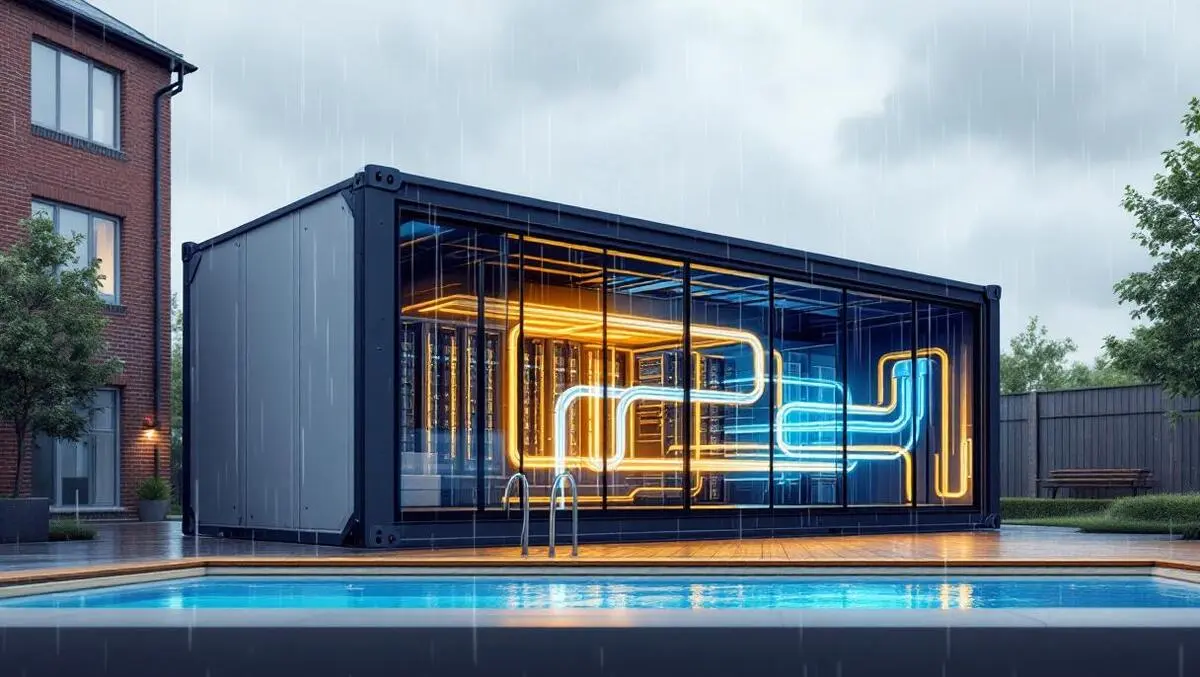
The Urmston site uses a modular design, which Deep Green says shortens build and fit-out timelines compared with conventional deployments. The target customers are those that want UK-hosted capacity quickly, as demand for AI compute puts pressure on data centre operators and the electricity networks that supply them.
Manchester capacity
The facility is designed for high-density racks, supporting up to 150kW per rack. That level is aimed at GPU clusters and other high-performance computing configurations that require substantial power and cooling in a compact footprint.
Deep Green also highlighted energy efficiency, saying the infrastructure operates at a sub-1.2 Power Usage Effectiveness (PUE) rating. PUE compares total facility energy use with the energy delivered to IT equipment; lower figures indicate less overhead from cooling and other non-compute loads, which can affect operating costs and the total power required.
Across the UK market, operators are working to raise rack densities as AI training and inference drive higher demand for power and cooling. The shift creates challenges for older facilities built for lower-density enterprise workloads, where retrofits can be costly and constrained by existing electrical and mechanical plant.
Deep Green describes its Manchester site as purpose-built for modern AI workloads and is offering what it calls sovereign, UK-based capacity-typically meaning data is hosted and processed inside the country. The concept has become more prominent in procurement discussions, particularly in regulated sectors and organisations with data-residency and operational-control requirements.
Deployment timeline
The four-week deployment claim stands out in a market where new data centre capacity can take years to bring online because of planning requirements, grid-connection lead times, and supply-chain constraints. Deep Green says its modular architecture and site design reduce the time between customer commitment and operational racks.
Mark Lee, Deep Green's CEO, said customer conversations have shifted from software tooling and hardware procurement to securing somewhere to run workloads.
"The conversations we're having with customers are remarkably consistent. They don't have a software problem or even a GPU problem. They have an infrastructure problem. Organisations need somewhere to run AI workloads today, not in two or three years' time. Our Manchester site allows organisations to deploy high-density AI racks in weeks, and while capacity is filling rapidly, we still have space available for those looking for sovereign UK compute available now," said Mark Lee, CEO, Deep Green.
Lee's comments reflect broader concerns in the UK market about access to power and the availability of suitable buildings for high-density compute. Grid constraints have led some projects to face long waits for new connections or upgrades, while local planning processes can lengthen delivery schedules. At the same time, the scale of AI workloads has increased the technical demands placed on data halls, including heat removal and resilience requirements.
Heat reuse
Deep Green says its infrastructure captures waste heat produced by compute and reuses it locally, with recovered heat serving nearby buildings and community facilities. Heat reuse has become a growing theme in data centre development, particularly in urban areas and regions where district heating networks exist or are being proposed.
The approach connects data centre operations to local energy systems rather than treating heat as a by-product that must be expelled. It can also shape how sites are viewed by local stakeholders, where energy efficiency and community impact are part of planning and engagement discussions.
Deep Green describes its business as building and operating high-density data centres that integrate heat capture and reuse. Its Manchester facility is the latest example of that model, focused on AI and high-performance computing colocation in the UK.
Deep Green says it still has space available at the Urmston site, while noting capacity is filling. The company expects to continue expanding UK-based high-density colocation as demand for AI compute grows and more organisations seek domestic hosting options for sensitive workloads.