

.webp)
Deep Green has secured planning approval for a 5.6-megawatt heat-reusing data centre in Bradford. The project will connect to the Bradford Energy Network.
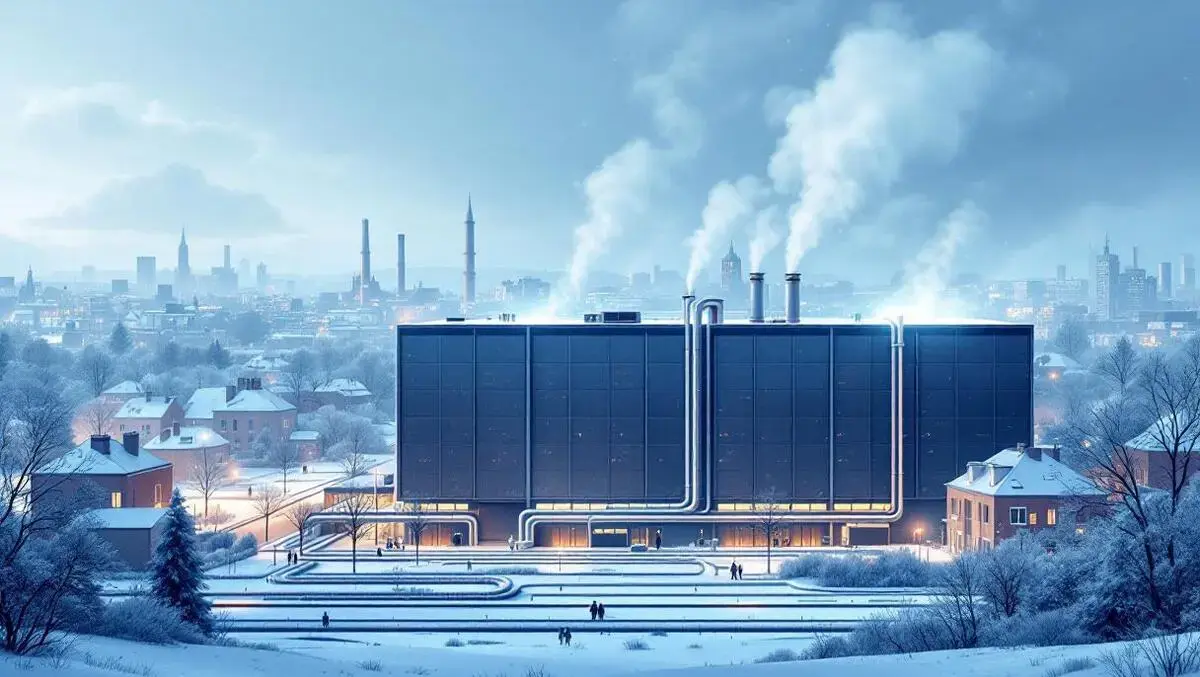
The facility is planned for Listerhills Road, beside the new Thornton Road energy centre. It will run AI and high-performance computing workloads while sending surplus heat into the district heating network being developed by 1Energy.
Once operational, the site is expected to cut carbon emissions by more than 4,500 tonnes a year. Its cooling model uses no water and can reuse up to 95% of the heat generated by the data centre.
The Bradford site will also offer colocation space for universities, public sector organisations and businesses handling AI inference and other data-intensive work. Deep Green says it selects sites based on access to power and fibre, as well as the potential to use waste heat locally.
Heat reuse
The planned connection to the Bradford Energy Network relies on a closed-loop cooling system. Instead of releasing heat into the air, the data centre is designed to capture it and transfer it into the local network for use in homes and commercial buildings.
1Energy is developing the district heating scheme as a low-carbon network for Bradford. Locating the data centre next to local heat demand avoids the losses and added infrastructure costs of moving heat over longer distances.
Tracy Brabin described the project as a broader endorsement of the region.
"This investment is a major vote of confidence in Bradford and in our region's future as an AI powerhouse.
"Deep Green's pioneering approach will power our businesses, heat our communities, support the creation of good jobs and help us meet our net zero ambitions.
"As the UK's youngest city and its leading producer of applied AI postgraduates, Bradford is perfectly placed to harness this opportunity and help us innovate to build a stronger, better-off West Yorkshire," said Tracy Brabin, Mayor of West Yorkshire.
Digital demand
Demand for data centre capacity has risen as organisations expand their use of AI tools and data-heavy applications. The Bradford project is aimed at customers that need dense computing infrastructure and can benefit from a site designed to export heat into a nearby network.
Mark Lee, chief executive of Deep Green, said the approval was part of a broader debate about the design of digital infrastructure.
"Planning approval in Bradford is a major milestone - not just for Deep Green, but for a different kind of digital infrastructure. The UK needs more data centres. That's a fact. But it does not need more waste.
"Our model is simple: use the electrons twice. First to power AI and high-performance computing. Then to heat homes and buildings. Bradford is showing what's possible when digital infrastructure is designed around community benefit from day one," he said.
The Bradford development is part of Deep Green's broader expansion, which includes projects in Manchester, London and the United States. The company has focused on locations with both computing demand and an outlet for recovered heat.
John Hartley, Chief Executive of 1Energy, said the scheme showed how digital and energy infrastructure could be combined at city level.
"Heat networks are all about making better use of local energy resources, and this is a brilliant example of that in action. By capturing and reusing surplus heat from the Deep Green facility, Bradford is showing how cities can combine digital infrastructure with sustainable heat supply in a way that delivers real benefits for local people and businesses. It's exactly the kind of innovative infrastructure partnership the UK needs as we look to strengthen energy security while supporting economic growth and digital innovation," he said.