

Water Direct launches WaterTight to boost UK resilience
Thu, 19th Feb 2026
Water Direct has launched WaterTight, a water resilience service for organisations exposed to operational and financial risk from supply interruptions. The launch comes alongside a new report warning that disruption risk is rising across the UK.
The report, State of UK Water Resilience 2025-26, argues boards should treat water resilience as a business continuity issue on a par with power and IT outages. It says organisations often underestimate potential costs and rely on reactive measures rather than planned responses.
UK water supplies are under pressure from ageing infrastructure, investment backlogs, and demand growth driven by population growth and development. Weather volatility has added to the strain. Disruption can result from burst mains, operational constraints at pumping stations and treatment works, and third-party damage to assets. Freeze-thaw cycles, storms, and drought conditions can also increase the likelihood of incidents.
The report estimates that the average daily outage in England in 2024-25 exceeded 500 million litres. It also estimates that about 19% of water entering the distribution system is lost before it reaches properties.
Survey findings cited in the report suggest disruption is already common for businesses. A YouGov survey conducted for Water Plus found that 46% of larger companies and 39% of SMEs had experienced water disruption.
Business exposure
Many organisations still treat water as a facilities issue rather than a board-level risk. The report frames the impact as both operational and broader, encompassing financial losses, regulatory exposure, and reputational damage.
Risk varies by sector and site configuration. Operations that rely on water for cooling, hygiene, processing, welfare, or fire-suppression readiness face tighter constraints when supplies are interrupted or quality is compromised.
Data centres are water-critical operations. The report estimates disruption costs of £5,000 to £7,000 a minute and lists impacts including reduced cooling resilience, increased thermal alarms, throttling or shutdown, service-level agreement breaches, customer downtime, issues with site welfare and fire-suppression readiness, and reputational damage.
Water Direct argues that businesses cannot automatically recover losses from supply interruptions, leaving many to absorb costs. The report urges organisations to define recovery objectives, allocate ownership, and put response arrangements in place before an incident occurs. It also calls for regular testing of contingency plans.
WaterTight service
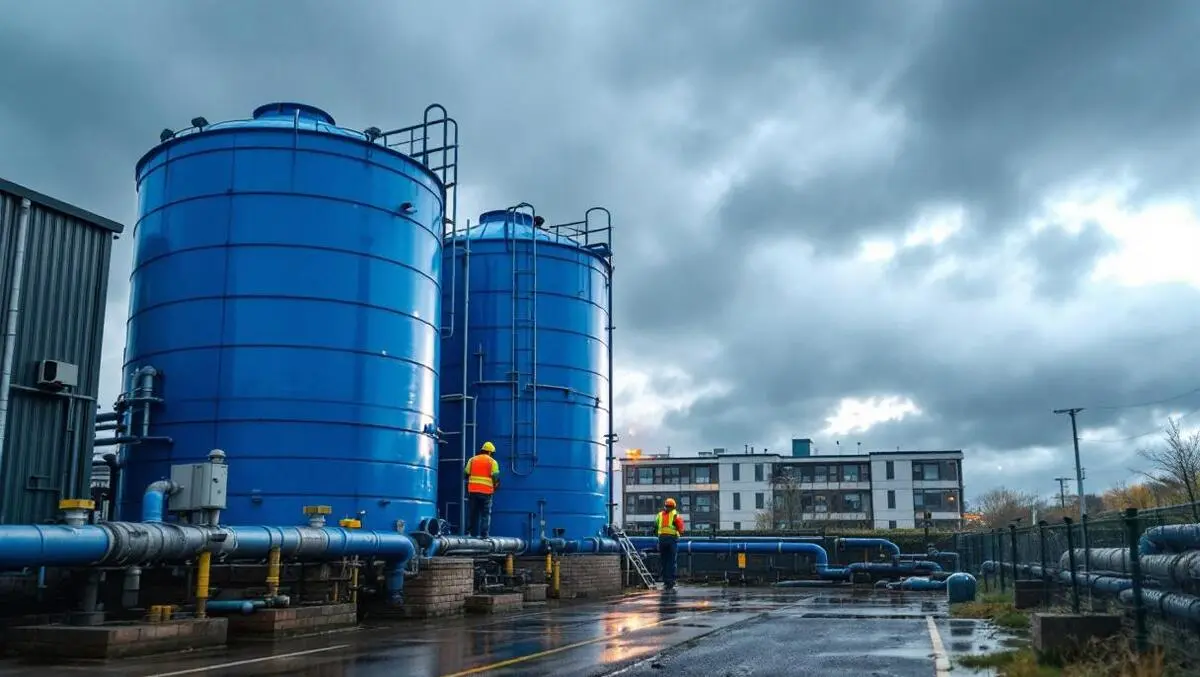
WaterTight is presented as a packaged approach combining site readiness work with pre-arranged supply and delivery. Water Direct says it includes audited site readiness, a tailored contingency plan, reserved water capacity, and service-level agreement-backed delivery.
The approach reflects a broader shift in business continuity planning as organisations map critical dependencies beyond electricity and connectivity. Water is often assumed to be abundant in UK operations planning, but the report suggests that assumption is being tested by more frequent and complex incidents.
Water Direct operates in the alternative water supply sector, providing planned and emergency support to utilities, businesses, and the public sector. Its services include temporary on-site storage, bulk drinking water supply, and logistics for emergency mobilisation and customer welfare during outages and planned works.
Maturity index
Alongside WaterTight, Water Direct introduced a Water Resilience Maturity Index, a free self-assessment tool for leadership teams. It is designed as a brief benchmarking exercise to highlight preparedness gaps and to prioritise actions for resilience planning.
Boards have faced growing scrutiny over operational resilience in recent years, including regulatory requirements and customer expectations that continuity planning extends across supply chains. The report argues water resilience now sits within that wider governance agenda.
Adam Johnson, chief executive of Water Direct, linked the issue to the changing reliability of the national network and the operational importance of clean supply.
"Water underpins UK business performance and public services. Businesses depend on clean, safe supply not only for drinking water, but to sustain safe and compliant operations. Historically the UK has enjoyed a dependable water network. However, that is changing and businesses are facing increased risk from water supply interruptions."
He added: "There's no question that water resilience should be a core part of operational risk management, not a nice to have. Preparedness must now be a key target for businesses."