

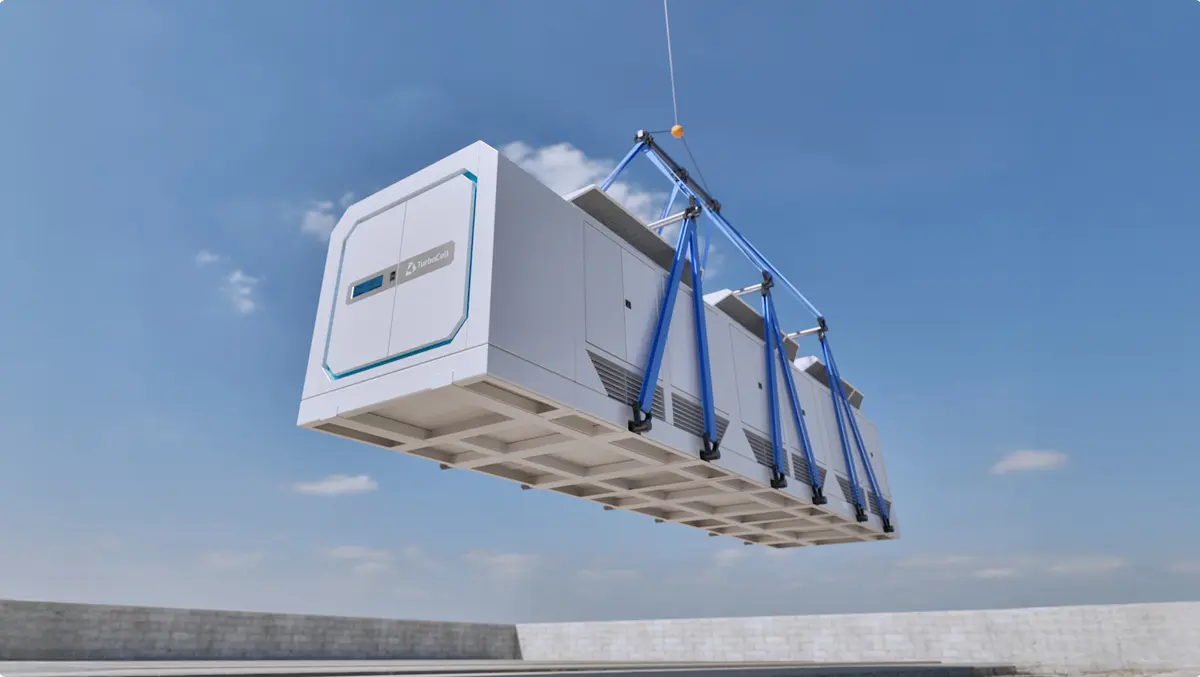
Endeavour unveils TurboCell to stabilise AI power demand
Thu, 12th Feb 2026
Endeavour has launched TurboCell, a modular power system for AI data centre operators facing delays in grid connections and broader constraints in utility generation capacity.
The product combines generation and battery storage in a single hybrid system. Endeavour positions it as bridge power that can serve as prime power before a site secures a grid connection, then shift into a long-term backup role once utility power is available.
Demand from AI training clusters has increased pressure on electricity networks in several markets. Large training runs can drive abrupt changes in consumption as thousands of GPUs switch between idle and peak load. Those swings can trigger voltage and frequency events, raising the risk of equipment trips and failures.
TurboCell is built around a Hybrid DC architecture intended to stabilise volatile loads at the source and prevent electrical disturbances from propagating into GPU power delivery systems, onsite generation equipment, or the utility grid.
TurboCell Chief Executive Officer Chris Ellis linked the launch to the scale-up of AI infrastructure.
He said, "With AI clusters scaling from tens of megawatts to gigawatt levels, we are seeing firsthand how the grid and legacy power systems are pushed to their limits. TurboCell is our answer: A rapidly deployable high-speed generator and hybrid battery system that delivers gigawatt-scale power with the real time stabilization needed to absorb large AI power swings."
Modular build
The system uses standardised modular units. Endeavour says the design provides redundancy and fault isolation while reducing reliance on large single points of failure. It also highlighted a "streamlined oneline" that it says supports changes in how deployed capacity is allocated across a site.
Endeavour also says TurboCell can scale on demand, helping operators align capital spend with changing requirements. That approach reflects the uncertainty many operators face when planning AI capacity, given fast-changing model sizes, utilisation patterns, and hardware refresh cycles.
Steve Fairfax, described as a data centre reliability expert, endorsed the approach. "When deployed in appropriate configurations, the inherent availability of power from arrays of TurboCell engines exceeds 99.999%," Fairfax said.
Prime to backup
A central part of the pitch is the shift from interim power to permanent standby. Conventional temporary generation can become redundant after a data centre connects to the grid, leaving equipment underused. Endeavour says TurboCell transitions from primary power to long-term backup after interconnection, improving utilisation and return on investment over an asset's life.
Endeavour also frames TurboCell as a way to manage the practicalities of grid development and utility planning. Large data centre campuses can face lengthy interconnection queues and local network reinforcement work, creating a gap between when a site is ready for IT loads and when sufficient grid supply arrives.
Emissions claims
Permitting and local air quality rules remain a constraint for onsite generation in many jurisdictions. Endeavour says TurboCell has "ultra-low emissions" and is designed for stringent regulatory frameworks. It says NOx emissions are 94% lower than diesel generators and 86% lower than natural gas turbines without aftertreatment, based on comparisons with published manufacturer specifications for Tier 2 diesel or a natural gas turbine using the same fuel source.
Endeavour says the system can run on natural gas, diesel, and hydrogen, describing that as a pathway to carbon-neutral power. It did not detail the configurations or fuel supply requirements that would apply at customer sites.
Sales channel
TurboCell sits alongside Endeavour's ThermalWorks cooling product as part of a broader data centre technology stack. Endeavour says the systems will be delivered through its Edged Infrastructure platform, which it describes as an integrated model that packages power and cooling for deployment.
Edged Infrastructure will be the exclusive channel for TurboCell sales. Endeavour says it is increasing US manufacturing capacity to multi-gigawatt scale and will begin shipping in 2026, with orders open for 2027 delivery.
Endeavour also outlined operating and service parameters, including a standard two-year warranty with a five-year option and 24/7 support. It says TurboCell is designed for non-disruptive maintenance and a minimum 80,000-hour product life.