

DataVita secures GBP £300 million to build AI data centres
Tue, 18th Aug 2026
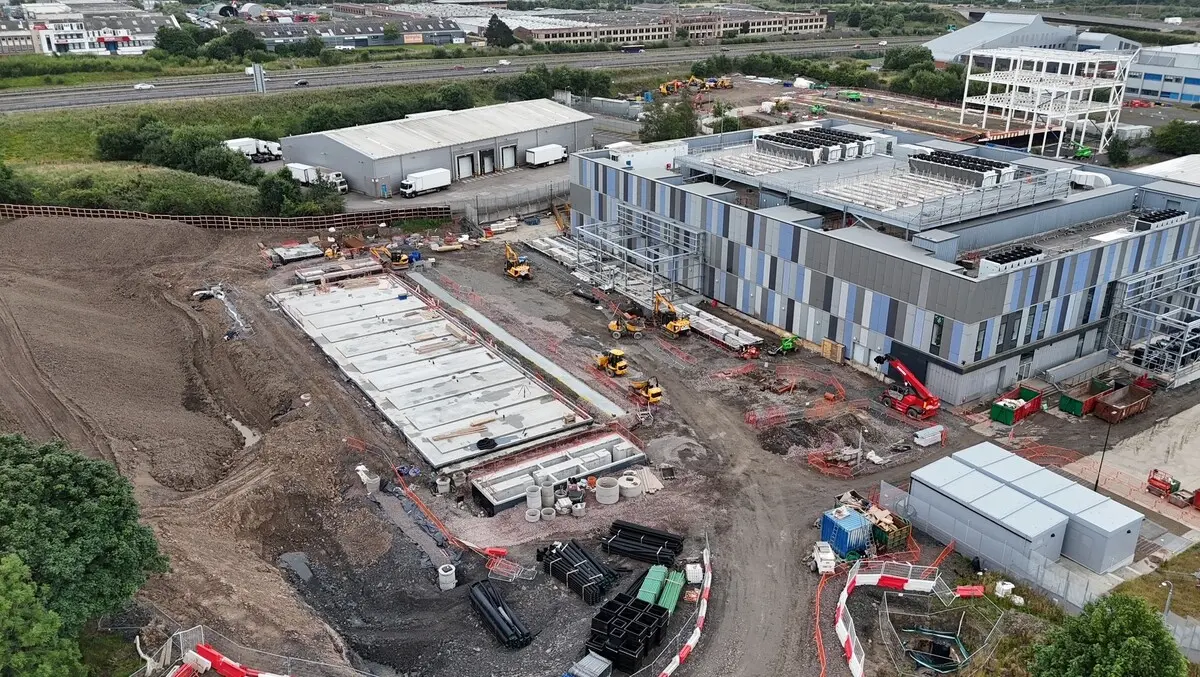
DataVita has secured a debt facility of about GBP £300 million to expand and build two data centres in North Lanarkshire, backed by a GBP £202 million guarantee from the National Wealth Fund.
The financing will support the expansion of DataVita's existing DV1 site and the construction of a new facility, DV3, within the area designated as Scotland's first AI Growth Zone. CoreWeave, an AI cloud company, has contracted the full capacity of both sites under a 15-year lease agreement.
Funding structure
A syndicate of lenders provided the facility, including ING, ABN AMRO, Santander, the Scottish National Investment Bank and Siemens Financial Services through Siemens Bank. The National Wealth Fund guarantee covers GBP £252.5 million of lending from ING, ABN AMRO and Santander, or 80% of that tranche. Lending from the Scottish National Investment Bank and Siemens Financial Services is not covered.
The transaction is the National Wealth Fund's first support for domestic compute capacity. Ministers presented it as part of a broader effort to expand UK-based AI infrastructure and reduce reliance on overseas capacity.
The build-out is also linked to a separate UK Government announcement that Dell Technologies will move its Scottish team to Mercury House in Lanarkshire's AI Innovation Park, a move expected to create high-skilled jobs in the area.
DataVita said the two developments financed by the facility would create about 600 jobs during construction and around 100 permanent high-skilled roles once complete. The company added that the North Lanarkshire development would be the first step in a larger planned data centre campus.
Growth zone
North Lanarkshire's designation as an AI Growth Zone has placed the site at the centre of government plans to attract private investment into digital infrastructure. The UK Government has argued that areas hosting the computing infrastructure behind AI stand to attract jobs and broader industrial activity.
Scottish ministers also linked the project to the country's AI strategy, saying the investment could help turn research and technical expertise into jobs and business growth.
According to the UK Government, wider adoption of AI could be worth up to GBP £47 billion a year to the UK economy over the next decade. Ministers have used that estimate to support public intervention aimed at unlocking private capital for infrastructure projects.
DataVita, which has operated in Scotland for more than a decade, is one of the country's largest independent data centre developers and operators. Its customers include central government, local authorities and universities, which use its infrastructure for domestic data and computing workloads.
The North Lanarkshire project will draw on Scotland's low-carbon electricity mix, the local climate and a closed-loop cooling system to reduce pressure on resources as demand for AI computing rises.
Government backing
"AI is already helping scientists discover new medicines, supporting better public services and helping businesses get more done. The countries that build the infrastructure behind this technology will be the ones that attract investment, create jobs and help shape the industries of the future," said Kanishka Narayan, UK AI Minister.
"That's why today's announcements matter. They will help ensure Scotland is at the forefront of one of the biggest economic opportunities of our time, bringing investment, reindustrialisation and opportunities to communities like Lanarkshire," said Narayan.
"For local people, that means more than new buildings and technology. It means the chance to develop new skills, access new careers and benefit from the growth and investment that AI can bring," added Narayan.
"This investment marks a milestone in the creation of Scotland's first AI Growth Zone in North Lanarkshire. I welcome the economic growth it is set to deliver across the region, including more than 3,400 new jobs and private investment totalling more than £8 billion," said Stephen Flynn, Economy Secretary, Scottish Government.
"The Scottish Government's AI Strategy sets out a clear plan to harness the economic and social benefits of AI to help ensure we translate our innovation and expertise into more businesses, jobs and investment," said Flynn.
"We will continue to work closely with DataVita and Growth Zone partners to realise the full economic and employment opportunities of this investment over the coming years," added Flynn.
"New compute capacity is key to unlocking the UK's future, yet private finance can be difficult to secure for emerging infrastructure at this scale. The National Wealth Fund's guarantee is helping address that gap, giving lenders the confidence to invest. By laying the foundation for the wider Lanarkshire AI Growth Zone, we are helping support innovation and local economic opportunity, while delivering critical compute capacity for the UK's sovereign AI ambitions," said Oliver Holbourn, Chief Executive Officer, National Wealth Fund.
DataVita plans
"There is plenty of talk about AI infrastructure just now. This project is being delivered: work is well advanced on site, every megawatt is contracted, and the first facility completes this year. DataVita delivers AI infrastructure end to end, from the energy that powers it through to the applications that run on it. We have been doing this in Scotland for more than ten years. The UK needs its own AI capability, built here and run here, and we are grateful to the National Wealth Fund and our lenders for backing a project that is already delivering it," said Danny Quinn, Managing Director, DataVita.
"This type of investment in Scotland's data centre infrastructure would have been unthinkable just two or three years ago. That is the impact AI is having. Scotland has all the right ingredients to take advantage of the AI revolution and make it a core part of its economy," said Quinn.