

Cortical Labs CL1 commercial milestone after AUD $245k grant
Wed, 29th Apr 2026
Cortical Labs has reached a series of commercial milestones after receiving an AUD $245,000 Early-Stage Commercialisation grant through the Australian Government's Industry Growth Program. The Melbourne startup said the funding helped it move from prototype to product.
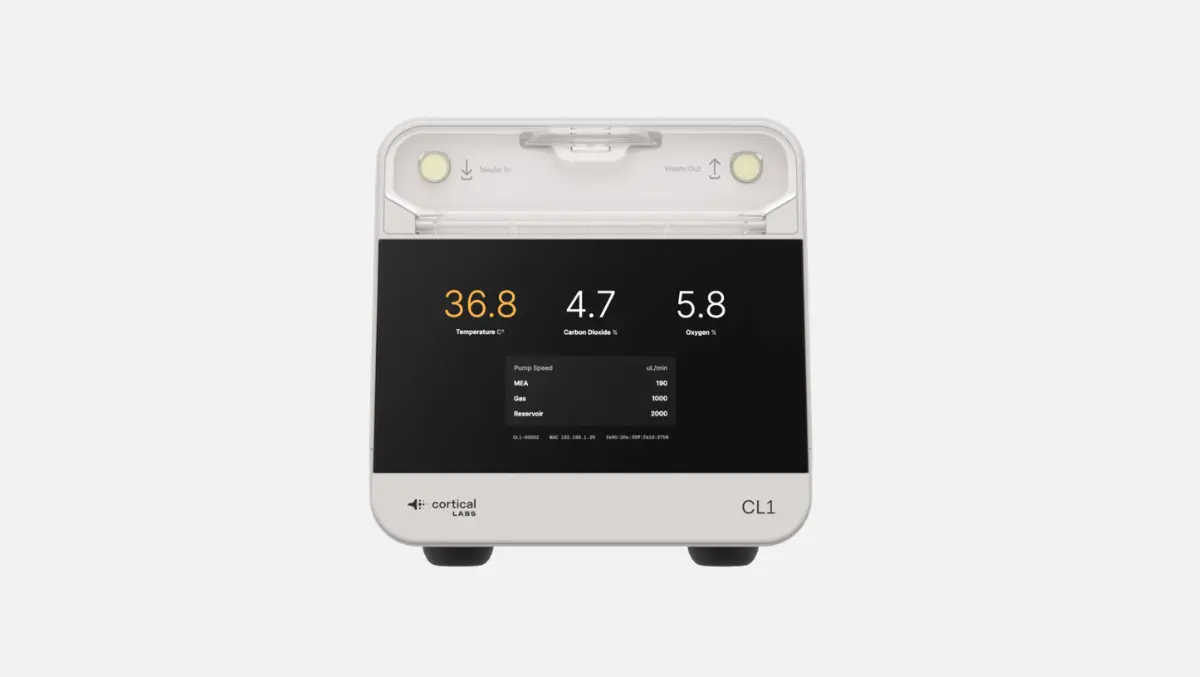
It has commercially launched its CL1 biological computer, opened its Cortical Cloud platform to users worldwide, released a public API for programming biological neural networks, and secured a partnership in Singapore for a biological data centre.
Cortical Labs describes CL1 as the world's first code-deployable biological computer. The system uses living human neural cells cultivated from induced stem cells on a silicon chip to create a hybrid biological-digital system.
The grant was awarded when the business had a working prototype but still needed to build the commercial infrastructure around it. That work included preparing CL1 for sale and developing the cloud platform that gives researchers and developers remote access to biological computing systems.
The cloud service is now open to public users, extending access beyond in-house research teams and early partners. Cortical Labs also released what it called the first bespoke public programming API for interacting with biological neural networks, giving outside users a way to write software for the platform.
Those commercial steps have also fed into an overseas infrastructure deal. Cortical Labs has partnered with Singapore-based data centre operator DayOne to build what it described as Singapore's first biological data centre.
From lab to market
The government funding helped the company bridge the gap between technical proof and a product customers could use. That transition is a common stumbling block for deep technology ventures, where hardware, software, and specialist infrastructure often need to be developed in parallel before revenue can scale.
Dr Brett J. Kagan, Co-founder and Chief Scientific Officer/Chief Operating Officer of Cortical Labs, said the support arrived at a pivotal point in the company's development.
"The Industry Growth Program supported us at exactly the right moment when we had a working prototype but needed to build the commercial infrastructure to make it accessible to the world," said Dr Brett J. Kagan, Co-founder and Chief Scientific Officer/Chief Operating Officer, Cortical Labs.
He linked the cloud platform directly to the company's international rollout and local infrastructure footprint.
"The Cortical Cloud, which the IGP helped us commercialise, is now the platform underpinning our global expansion, including our biological data centres in Melbourne. This is what early-stage government support looks like when it's well-targeted: it accelerates companies that are building genuinely new categories, not incremental improvements," Kagan said.
Energy focus
Cortical Labs has framed its technology partly around the energy demands of conventional artificial intelligence computing. It said a rack of 20 CL1 units draws about 0.6 kilowatts of power, compared with the multi-megawatt demands tied to standard AI training infrastructure.
That claim places its biological computing platform within a broader industry debate over data centre electricity use, grid constraints, and the environmental cost of building larger AI systems. Investors and policymakers have increasingly focused on whether alternative computing architectures can reduce the power burden created by the current wave of AI development.
Alongside its commercial work, Cortical Labs said it continued research aimed at improving the information-processing performance of its biological systems. That includes developing what it calls Bioengineered Intelligence units, designed to train small, highly organised neuron cultures to carry out complex processing tasks.
The company also said its Melbourne biological data centre prototype is now fully operational. The site houses 120 CL1 units and is attracting users from around the world who are testing possible applications for the technology.
Cortical Labs offers a rare example of an Australian deep technology company moving from laboratory research to an early global commercial footprint in a relatively short period. Its progress also provides a test case for whether modest public funding at an early stage can help highly specialised ventures build the systems needed to reach customers beyond research settings.
A fully operational Melbourne prototype housing 120 CL1 units is now being used by customers exploring potential applications for biological computing, according to the company.