Compute stories
Buyers of hybrid meeting systems are placing greater weight on audio quality and manageability, boosting Shure's standing in IDC's latest review.
For buyers, the benchmark suggests that annual bills for the same workload can differ by hundreds of thousands of dollars between cloud warehouses.
An accessible public art project brought 200 people together in Hereford, highlighting the micro:bit's reach as it marks a decade since launch.
The anniversary project brought 200 people together in Hereford, showing the tiny computer can make coding accessible to blind and sighted participants alike.
Filtering security logs before they reach AI models could save organisations 79% on annual costs, according to WitFoo's paper.
Better timing is becoming a bottleneck in AI clusters, prompting Rakon to add clocks and oscillators for networking, synchronisation and compute layers.
The new service aims to make AI agents faster to start, cheaper to run and safer to isolate as cloud demand shifts beyond chatbots.
The tie-up could help hyperscalers bring AI capacity online sooner by standardising how compute, power and cooling are deployed.
The changes aim to reduce bottlenecks and outages for customers running large AI workloads across Oracle Cloud Infrastructure.
The deal should give enterprise customers more capacity for AI agents and inference without overhauling the business software they already use.
Independent testing will determine whether ION Video's compression technology can win a US$1 million Nordic trial and cut data centre costs.
Smaller sites can now run AI and storage together more cheaply, as the new version targets remote offices and on-premises deployments.
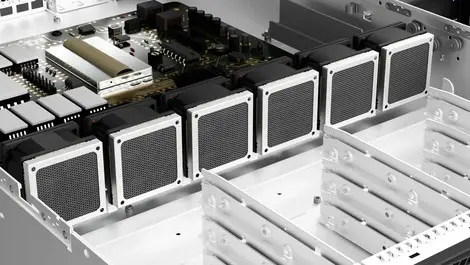
Data centre operators can now cool power-dense enclosures without sacrificing electromagnetic shielding, thanks to a new vent panel with up to 96% airflow.
Each winning group will receive JPY ¥10 million for work that could sharpen timekeeping and strengthen AI decision-making across industry.
The funding backs efforts to reduce downtime in large AI systems as optical links become a critical bottleneck across data centres.
Enterprises can switch virtualisation platforms without replacing NetApp arrays, as the integration lets Nutanix AHV run on existing ONTAP storage.
As AI workloads shift from training to inference, firms risk stranded kit unless they build systems that can adapt over five to seven years.
The project aims to squeeze up to 35% more usable compute from the same power supply as AI demand increasingly hits cooling limits.
The service gives organisations an offline back-up for critical records, aiming to improve recovery after cyber attacks and other disruptions.
The new range aims to help enterprises run AI inference and analytics on standard servers while adding stronger security and easier management.