Arm stories
Strong demand for women-focused tech leadership events was shown by an inaugural Cambridge gathering that drew 160 people and a 150-plus waiting list.
The package will fund chips, a supercomputer and skills training, as ministers seek to build domestic AI capacity and speed workplace adoption.
The city region is drawing more investors and employers as nearly USD $1 billion has flowed into its AI firms since 2010.
London Tech Week 2026 unveils an AI-heavy agenda, with founders and global enterprises set to debate sovereign models and large-scale deployment.
Security checks will now cover more Arm processors, as the chip designer broadens use of Arteris' Radix tool to spot flaws earlier.
The financing will fund MSAI's largest sovereign hardware deployment to date, with new compute installed in Scotland for UK-based AI customers.
The deal will give procurement teams access to a larger pricing dataset spanning USD $75 billion in indirect spend, boosting negotiation insight.
Windows PCs with up to 128GB of unified memory could let developers and creators run larger AI models locally, Microsoft said.
The move broadens Arm-based computing into budget PCs, as Qualcomm targets student and small business buyers with all-day battery life and AI features.
Platform teams can trim Kubernetes cloud bills by up to 70% without surrendering control, using recommendations before fixes are applied.
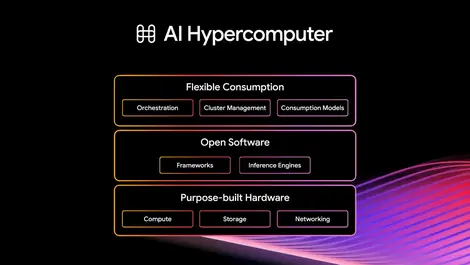
Customers will soon get faster, cheaper AI training and inference as Google Cloud adds new TPUs, GPU instances and networking.
AMD is pitching EPYC chips as the orchestration engines for “agentic AI”, arguing CPUs must steer ever-busier accelerators in data centres.
DTCC maps an ambitious 2026 plan, deepening tokenisation and AI while overhauling risk, collateral and post-trade ahead of Europe's T+1 shift.
Qualcomm debuts Snapdragon X2 Plus chip, promising faster, more efficient Copilot+ Windows 11 laptops arriving from major brands in 2026.
Siemens launches PAVE360 Automotive, a cloud digital twin promising day-one virtual development for complex software-defined vehicles.
Proofpoint has appointed Joyce Kim as Chief Marketing Officer to lead its marketing strategy amid rising AI adoption in cybersecurity and data protection.
Siemens has integrated Arm's new Zena Compute Subsystems into its PAVE360 platform, accelerating AI-driven software development for automotive design.
Red Hat is developing a partner ecosystem to integrate software and services into its In-Vehicle Operating System for future software-defined vehicles.
Automation projects may be easier to trust as BlueAlly adopts NetBox Labs' infrastructure data platform across customer deployments.
The chipmaker is boosting US investment as AI demand strains advanced capacity and pushes full-year spending higher.