

Esmo launches Vulcon contactors for semiconductor final test
Fri, 20th Nov 2026 (Today)
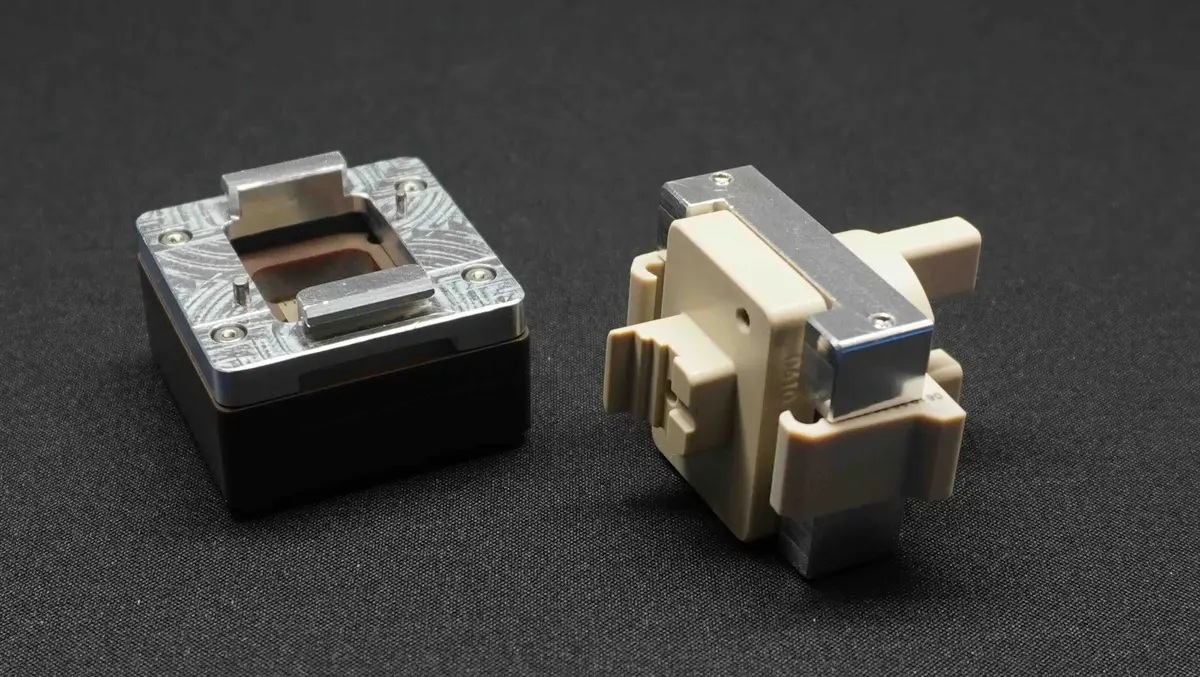
esmo has launched its Vulcon contactor range for semiconductor final test, extending its test cell offering into contactors.
The Rosenheim-based supplier developed the new range in-house and will sell it for use with any handler brand, including its own systems. The launch fills what esmo described as the remaining gap in its mechanical test cell portfolio, which already includes manipulators, docking systems, interfacing components and handlers.
Contactor systems sit close to the semiconductor device during final test, linking it to the wider test setup. The Vulcon family is designed to cover a wide range of applications, with configurations tailored to specific test requirements and customer needs.
Portfolio expansion
The move expands esmo semicon's offering. Since 2001, it has supplied mechanical systems around the tester. By adding contactors, the business is seeking a broader role in the final test market, where handling systems and contactors are often sourced from different suppliers and production floors commonly run equipment from several manufacturers.
The new range is intended to work across mixed manufacturing environments. That vendor-neutral approach is likely to matter for chipmakers and outsourced semiconductor assembly and test groups using multiple handler platforms on the same production floor.
For customers already using esmo handling, docking and interfacing equipment, the launch means the company can now supply the full mechanical path between the tester and the device. That gives esmo responsibility for the performance of those elements as a single set-up.
"Our customers could always come to us for the handler, the manipulator, and the docking system," said Josef Weinberger, head of business unit, esmo semicon. "Contacting was the gap, and it is the part closest to the device. Closing it means we can stand behind how the whole cell performs."
Final test focus
At launch, the Vulcon range is aimed at power device testing for automotive and industrial applications. esmo also pointed to use in testing components for power supplies used in AI data centres, where demand for semiconductor reliability and throughput has risen alongside investment in computing infrastructure.
Final test remains a critical stage in semiconductor manufacturing because it determines whether packaged devices meet electrical and thermal requirements before shipment. In power semiconductors, those tests can be especially demanding because the devices are often used in applications with strict durability and safety requirements.
esmo will pair the hardware with engineering support to match specific contactor configurations to customer test requirements. This positions the product as a configurable range rather than a single standard part, reflecting the variety of package types, contact technologies and handler platforms in semiconductor test operations.
The Vulcon family spans contact technologies, package types and handler platforms. That breadth matters in final test, where customers often want to standardise parts of their equipment chain while still supporting different device formats and production lines.
"Cost of test is what our customers are working to reduce," said Weinberger. "Longer contact life, higher test yield, and longer intervals between cleaning all feed into that. Just as important is understanding what a test floor realistically needs and then building to it."
Industry setting
The launch comes as semiconductor equipment suppliers look for ways to capture a larger share of spending around testing and handling, particularly in power electronics. Automotive electrification, industrial automation and data centre expansion have all supported demand for chips that need robust final test processes.
esmo described Vulcon as completing its test cell portfolio in its 25th year. The company operates in semiconductor equipment as part of a wider engineering group and is a member company of ORISEMI.
First shipments are due to reach customers in Europe and Asia before the end of the year.