

Southampton Science Park hits 1MW solar power milestone
Fri, 27th Feb 2026
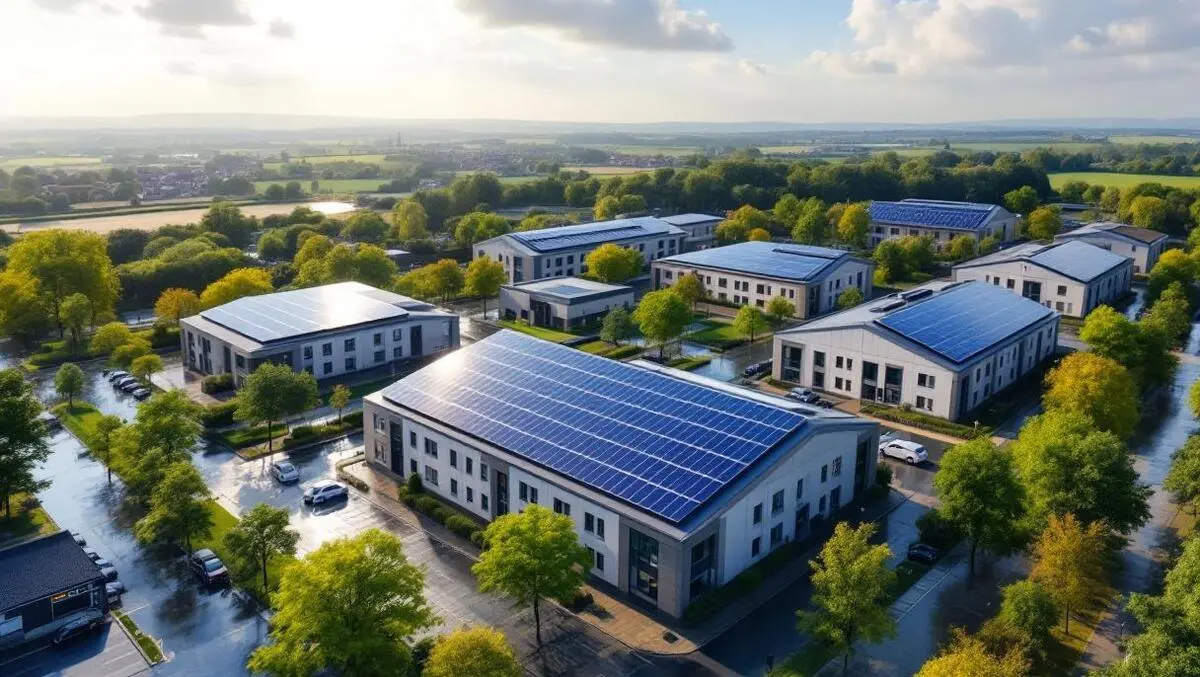
Southampton Science Park has reached 1 megawatt of installed solar capacity across its estate, a threshold developer Absolar says makes it the first UK science park to hit the mark.
The installation spans 10 buildings and forms part of the site's energy infrastructure. The organisations involved estimate it will avoid around 220 tonnes of CO2 emissions each year.
The milestone coincided with unusually wet weather in southern England. Monitoring data showed electricity generation in January 2026 was close to the level recorded a year earlier, despite much higher rainfall.
Wet weather test
Meteorological data for the region showed record rainfall in January 2026, with some areas recording precipitation every day of the month. The conditions created an unexpected test of solar output during prolonged overcast weather, Absolar said.
Figures for Southampton Science Park show 13,855.2 kWh produced in January 2025, when rainfall totalled 129mm. In January 2026, the site generated 13,167.4 kWh, with rainfall of 179mm. That was a 5% fall in output alongside a 39% increase in rainfall.
"Solar panels generate electricity from daylight, not just direct sunlight," said Dr Phil Wu, CEO of Absolar. "Overcast conditions reduce peak generation but don't switch systems off. Well designed systems are modelled for UK weather realities where there are poor weeks and average months, not only ideal conditions."
Absolar also pointed to a secondary effect of persistent rain: it can wash away dust, pollen and debris that build up during dry periods, reducing the need for manual cleaning on some sites.
Estate scale roll-out
Based on estimated annual generation, the 1MW system produces enough electricity each year to power about 260 average UK homes, according to figures provided by Absolar. The same estimates put annual CO2 savings at around 220 tonnes, comparable to removing roughly 50 cars from the road each year.
The system supplies renewable electricity directly to companies based on the site, the organisations said. It also reflects a broader push by property owners and large estates to cut energy bills and reduce operational emissions through on-site generation.
Southampton Science Park said the partnership also has a local dimension: Absolar was founded by University of Southampton alumni and is headquartered at the science park.
Dr Wu framed the project as part of the company's history at the site. "This represents more than a commercial project," he said. "Our team of engineers and scientists were educated at Southampton, incubated at the Science Park and now we're powering our own campus with clean energy. It's proof that the innovation ecosystem here works."
Remote surveying
Absolar said its approach differs from traditional installers by assessing buildings remotely. It uses AI-powered remote sensing and LiDAR to survey multiple buildings at once, rather than relying on physical site visits for each roof.
For multi-site owners, these tools can reduce the cost and time of surveying. They can also help with early-stage screening of large portfolios before a project moves to detailed design and approvals.
Absolar cited industry data suggesting solar remains rare across the UK built environment. It said less than 5% of buildings currently have solar installations, citing Ordnance Survey research published in 2025.
Absolar also said its surveying approach has led to partnerships with organisations including the Royal Air Force, NatWest and multiple councils. It did not disclose contract sizes or the status of those deployments.
Science park model
Science parks often cluster offices, laboratories and light industrial buildings. These typically have large roof areas and predictable daytime electricity use, which can make them suitable for on-site solar. A 1MW estate-wide system also allows a phased roll-out across buildings, rather than a single installation on one roof.
Stuart Perry, operations director at Southampton Science Park, said: "Reaching 1 megawatt of solar capacity makes Southampton Science Park a national leader in estate sustainability. We're proud that this milestone was achieved in partnership with Absolar, a company that exemplifies exactly what we aim to foster here: innovative businesses that grow from university research into industry leaders. The installation now provides our tenant companies with access to clean energy, reducing costs while supporting their own net zero commitments."
Looking ahead, Absolar said the project could serve as a reference point for other science parks and innovation districts considering estate-wide solar programmes, as electricity demand is expected to rise over the coming decades as heating and transport shift towards electrification.